

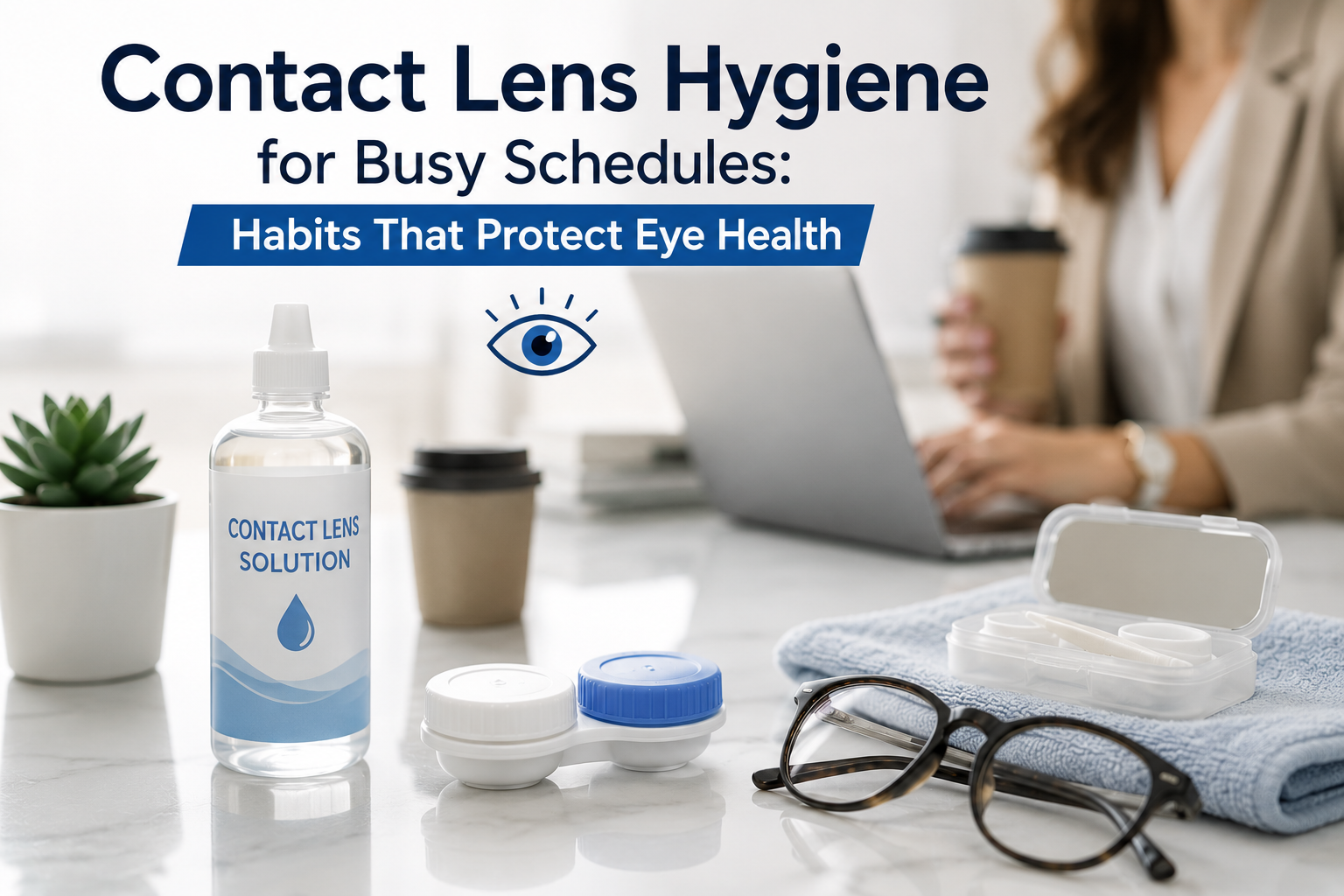
A packed schedule can make contact lens care feel like one more task to rush. However, a few simple habits can protect your comfort, vision, and long-term eye health. A professional contact lens consultation can help you understand the correct wearing schedule, cleaning method, and lens type for your routine. Contact lenses are safe and effective when worn, cleaned, and stored as directed.
Why Contact Lens Hygiene Matters
Small Shortcuts Can Create Bigger Problems
Contact lenses sit directly on the surface of your eyes. Anything on your hands, lens case, or lenses may therefore come into contact with sensitive eye tissue.
Poor hygiene can allow germs to build up. This may lead to redness, irritation, blurred vision, or an eye infection. Busy people may be tempted to skip steps, reuse solution, or wear lenses longer than recommended. These shortcuts save minutes but increase risk.
Good care does not need to take long. The key is making safe habits automatic.
Are Daily, Two-Week, or Monthly Lenses Right for You?
Daily disposable lenses are worn once and discarded, making them convenient for busy schedules, travel, or occasional wear. They usually cost more for everyday use but do not require cleaning solution or a storage case. Two-week lenses may offer a middle ground between convenience and cost, but they must be cleaned, disinfected, and replaced on schedule.
Monthly lenses often have a lower cost per day for regular wear, although you also need to budget for solution and replacement cases. They require the most consistent care and should never be worn beyond the recommended replacement period. A contact lens consultation can help you compare comfort, hygiene needs, wearing frequency, and overall cost before choosing the right option.
Build a Simple Morning Routine
Start With Clean, Dry Hands
Always wash your hands with soap and water before touching your contact lenses. Dry them fully with a clean, lint-free towel. Wet hands can transfer water and germs onto the lenses.
Handle your lenses before applying makeup or face products. This lowers the chance of oils, creams, or cosmetics reaching the lens surface.
Follow the same order each morning:
- Wash and dry your hands.
- Check each lens for tears, dirt, or damage.
- Insert the lenses using clean fingertips.
- Confirm that your vision feels clear and comfortable.
- Keep your lens supplies in a clean, dry place.
A routine becomes faster when the steps stay consistent.
Create an Evening Habit You Will Follow
Remove Lenses Before You Become Too Tired
Many hygiene mistakes happen late at night. Set a phone reminder to remove your lenses before you feel sleepy. Unless your eye care professional has approved overnight wear, do not sleep in them.
For reusable lenses, rub and rinse them with the recommended disinfecting solution. Place them in a clean case filled with fresh solution. Never add new solution on top of old liquid.
Daily disposable lenses should be thrown away after use. They are not designed to be cleaned, stored, or worn again.
Keep Contact Lenses Away From Water
Showering and Swimming Are Not Safe Shortcuts
Tap water may be safe to drink, but it is not sterile. Water can carry microorganisms that may attach to contact lenses and reach the eye.
Remove lenses before showering, swimming, or using a hot tub. Never rinse lenses or a storage case with tap water. Use only the care products recommended for your lens type.
If water gets into your eyes while you are wearing lenses, remove them as soon as possible. Ask your eye care professional whether they should be discarded or disinfected.
Care for the Lens Case
The Case Needs Cleaning Too
A dirty case can contaminate clean lenses. After removing your lenses, empty the old solution. Rub and rinse the case with fresh contact lens solution. Leave it upside down with the caps off to air-dry.
Replace the case at least every three months, or sooner if it becomes cracked, cloudy, or dirty. Keep it away from sink splashes and damp areas.
Prepare a Small Contact Lens Kit
Make Safe Choices Easier When You Are Out
A small kit can prevent risky decisions during a long workday, commute, or trip. Keep it in your bag, desk, or carry-on.
Useful items include:
- Backup glasses with a current prescription
- Spare lenses in sealed packaging
- Travel-sized contact lens solution
- A clean lens case
- Clean tissues or a lint-free towel
- Drops approved for contact lens use
Never transfer solution into an unmarked container. Do not use saliva, bottled water, or homemade mixtures when proper solution is unavailable.
Know When to Stop Wearing Your Lenses
Do Not Ignore Eye Discomfort
Remove your lenses if you develop pain, unusual redness, light sensitivity, discharge, sudden blurred vision, or ongoing discomfort. Do not put them back in until you receive professional advice.
A contact lens consultation is useful when lenses regularly feel dry, move around, or become uncomfortable early. The issue may involve fit, wearing time, lens material, prescription, or your cleaning routine.
Spectacle Hut supports new and experienced wearers through fitting guidance, lens care instructions, suitable solution advice, regular eye checks, vision tests, and follow-up support. A contact lens fitting and aftercare consultation can help match safe habits and lens options to your needs.
Protect Your Eyes Without Slowing Down
Contact lens hygiene is easier when it becomes part of your schedule. Wash and dry your hands, use fresh solution, avoid water, replace lenses on time, and carry backup glasses. These small actions take only a few minutes but can support clearer vision, better comfort, and healthier eyes throughout a busy day.
