

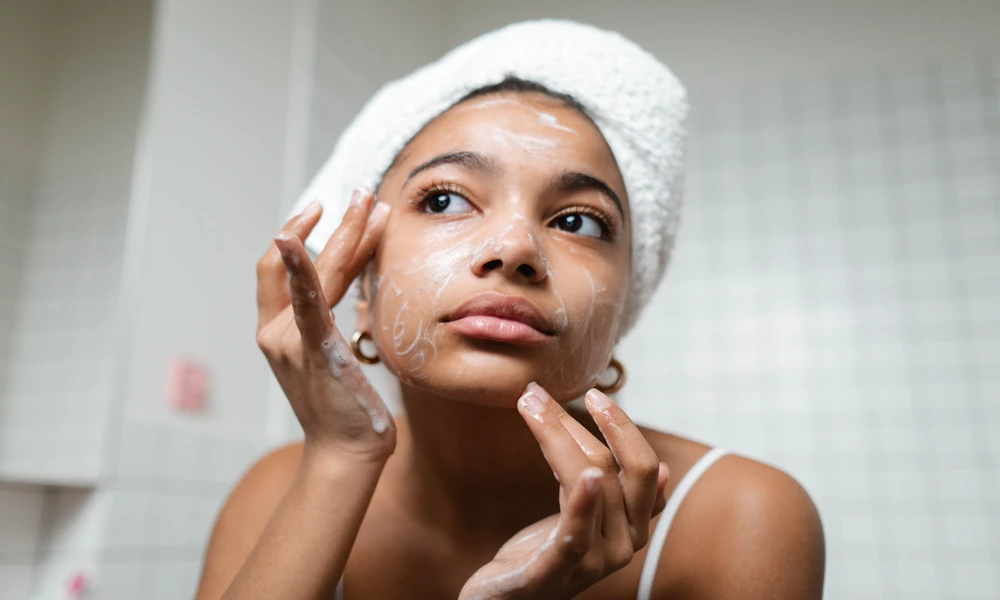
Before arranging facial waxing, tell the provider what you currently use on the area and resolve any medication questions with an appropriate healthcare professional. A familiar appointment is still worth reconsidering when your routine changes. Do not independently interrupt prescribed treatment or use a general online timetable as personal clearance to wax.
People often organize hair removal around a visible occasion: photographs, travel, or an event. The calendar becomes the main question, while a new cream or prescription feels like unrelated background. The more useful starting point is the skin and treatment history you are bringing to the appointment. The occasion can wait until the suitability question has an answer.
Start with the products rather than the occasion
Gather accurate names, including the formulation and instructions where available. “My usual face cream” is not very informative if the provider does not know what it contains. A photograph of the label or the actual product information can reduce confusion between similarly named items. Include relevant prescription products rather than assuming that a cosmetic provider would only be interested in retail skincare.
The American Academy of Dermatology’s waxing guidance flags retinol products, prescription retinoids, and recent isotretinoin use as important precautions. It also cautions against waxing sunburned or very sensitive skin. These warnings show why current products and skin condition belong in the discussion; they are not a personal instruction to stop a medicine so an appointment can proceed.
Record when a relevant product or treatment changed, without trying to interpret the significance yourself. If you do not know an ingredient or cannot remember the last use, say that. An honest uncertainty is more helpful than an approximate answer supplied because you feel the booking conversation is taking too long.
Keep the record focused. You do not need to share unrelated personal information with everyone who handles the reservation. Ask how to pass relevant details to the person providing the service, particularly when the initial contact is through a general inbox or booking desk. Privacy and accurate communication can be considered together.
Resolve the clinical question before the cosmetic booking
If a prescription, diagnosed condition, recent procedure, or persistent reaction raises uncertainty, ask the clinician or pharmacist who can advise on that specific issue. Describe the proposed hair-removal method and body area. “Can I have beauty treatments?” may be too broad to produce an answer that applies to facial waxing.
Do not present a preferred date as a reason a medication must be paused. The task is to find out whether the cosmetic service is appropriate alongside your care, and what alternatives or timing questions require professional advice. A scheduled event does not supply the clinical information needed to make that judgement.
Online instructions often describe a general situation and may concern home waxing rather than your particular service. Reading them can help you recognize a question, but it does not establish that every other relevant issue has been considered. If advice from different sources seems inconsistent, take the apparent disagreement to a qualified professional rather than averaging the waiting periods.
Ask for clarification if an answer still leaves you unsure whether it applies to the product you use. Similar words on packaging can obscure meaningful differences. You can provide the label or prescription information rather than attempting to translate it from memory. Resolve the uncertainty before paying for an appointment whose suitability depends on it.
Make the planned area and method explicit
Once you have the necessary professional advice, return to the service details. Which area is being booked, and what method will be used? A booking category covering several hair-removal services should not leave the actual procedure ambiguous. If a proposed substitution comes up, it needs its own discussion instead of being assumed equivalent.
Read the venue’s facial waxing service information as an introduction to that conversation. Azure Aqua Spa’s Kitchener-Waterloo page, for example, lists face and eyebrow waxing alongside other waxing areas and facial treatments. The availability of a listed service is different from a determination that it suits your current skin and product use.
Keep separate appointments visible to the people advising you where they are relevant. A facial, a peel, a recent skincare procedure, and waxing should not become isolated conversations if one could affect advice about another. State what has already happened and what you are considering; do not ask a provider to infer the rest from a calendar gap.
Agree on the scope before the service begins. Adding another area at the last minute may introduce a question that was never discussed. A small purchase addition can still be a meaningful procedural change. It is reasonable to keep the appointment limited to the area and method you have actually considered.
Carry the decision through to the appointment
Revisit the information if something changes between booking and arrival. New irritation, a different prescription, or another procedure can make the earlier conversation incomplete. Tell the provider before the service starts. You are updating the facts, rather than asking them to honour a previous answer given under different circumstances.
If the provider decides not to proceed or recommends seeking further advice, clarify the next practical step and the booking arrangements. Do not pressure them to continue because the appointment was difficult to secure. Equally, do not accept a vague assurance as a replacement for an unresolved question that needs qualified attention.
Postponing a cosmetic appointment can be inconvenient without being a crisis. Keep the product details and any relevant professional advice available for a later conversation. The useful outcome is a decision based on your current situation, including the possibility of choosing another approach, while leaving prescribed care under the direction of the professional responsible for it.
